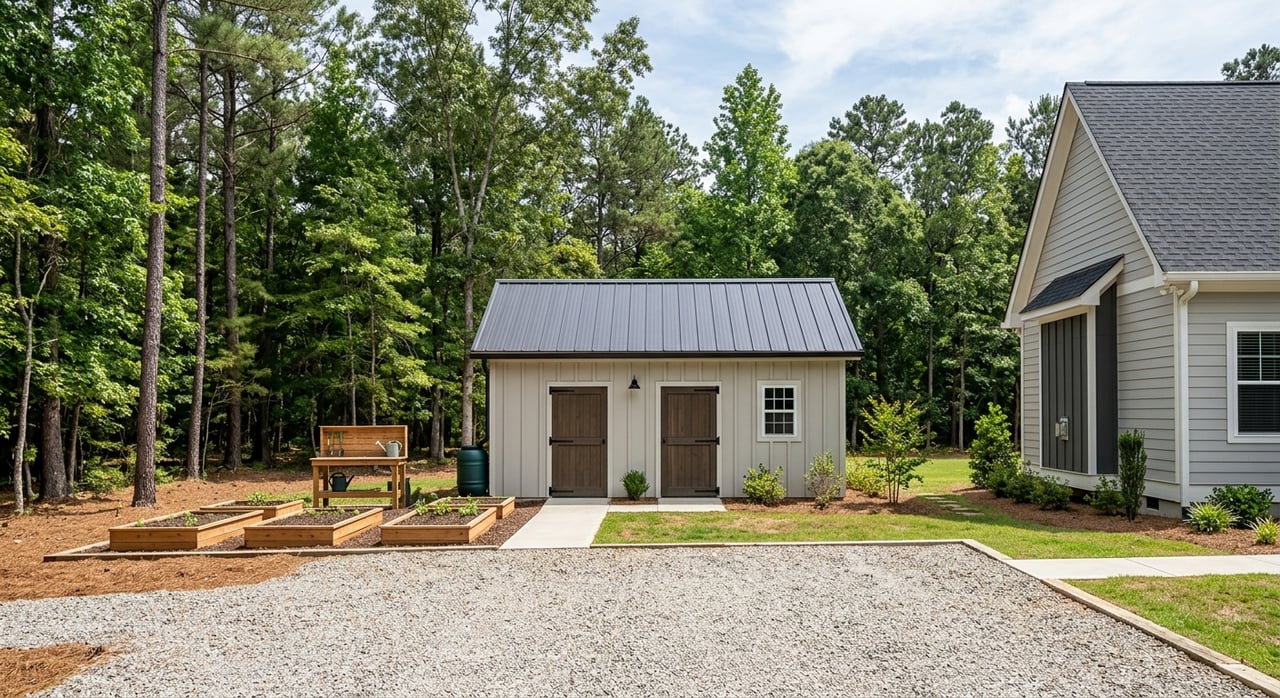
What to Know About Cameron NC Mini Farm Homes
June 25, 2026
June 25, 2026
Dreaming about a few acres near Cameron for gardens, animals, or a small barn setup? It is an exciting idea, but acreage shopping can get complicated fast when a property crosses county lines or has limits you cannot see from the road. If you want a mini-farm or homestead that truly works for your plans, a little upfront due diligence can save you time, money, and frustration. Let’s dive in.
Around Cameron, one of the first things to confirm is where the parcel actually sits. Harnett County’s zoning map and planning rules apply in Harnett County, while the Town of Cameron is in Moore County, so two properties described the same way can fall under different rules.
That matters because zoning and structure standards can change by jurisdiction. If you are picturing a barn, kennel, workshop, fenced runs, or future outbuildings, checking the county line early is one of the smartest first steps you can take.
A five-acre tract does not always function like five usable acres. For a mini-farm or homestead, what matters most is how much ground is workable after you account for slope, wet areas, tree cover, access, and the shape of the buildable area.
A parcel can look perfect online and still leave you with limited space for a garden, pasture rotation, barn pad, or compost area. The goal is to picture how the land will work day to day, not just how large it looks on paper.
When you tour land, think beyond the homesite. Ask yourself where you would realistically place key features and whether those pieces fit together in a practical way.
You may want room for:
The official starting point for this review is the soil data. USDA NRCS identifies Web Soil Survey as the official source of soils information, which makes it a useful first check for drainage, soil limitations, and how different parts of a parcel may perform.
Soils can shape almost every part of your plan. The prettiest section of a lot may not be the best location for crops, pasture, or a building site if drainage is poor or the soil has limitations.
This is why soil review should happen early in your search. Harnett planning also points buyers toward flood-risk resources, so it makes sense to screen both soils and flood concerns before you get too far into planning improvements.
If you are thinking about gardens, pasture, or structures, soils help answer practical questions like:
For acreage buyers, these are not small details. They affect how flexible the property feels once you own it.
For many Cameron-area acreage properties, private well and septic planning is just as important as the house itself. North Carolina DHHS says counties must permit, inspect, and test private drinking water wells constructed, repaired, or abandoned on or after July 1, 2008.
The same DHHS guidance says the well-to-septic separation is generally 100 feet, with a 50-foot minimum allowed only in limited cases. That spacing can influence where you place a home, barn, garden, or future addition, so it is worth checking early.
Harnett County Environmental Health has an On-Site Wastewater Section, which makes septic feasibility an important part of early due diligence. If the septic layout is tight or awkward, it can affect how the rest of the property functions.
Before you fall in love with a parcel, it helps to ask whether the water and wastewater setup leaves enough room for the improvements you want. A property may have acreage, but the workable layout can still feel restricted.
If the parcel is in Harnett County, accessory-building rules deserve close attention. Under the county ordinance, accessory buildings generally belong in the rear or side yard.
A front-yard accessory building is allowed only if the lot is 2 acres or larger, or 5 acres or larger inside a named major subdivision. Even then, only one front-yard accessory building may be placed there.
The ordinance also allows smaller accessory buildings up to 600 square feet in side or rear yards if they are at least 5 feet from the property line. These details matter if your wish list includes a workshop, equipment storage, or a small barn-type structure.
Private accessory kennels are also regulated in Harnett County. The UDO says kennel structures and related areas must be in the rear yard, at least 10 feet from all property lines, and they require a building permit.
If your plans include dogs or other small-scale animal uses, it is smart to verify these requirements before making assumptions. Small details on paper can have a big impact on how comfortably a property supports your lifestyle.
One of the biggest planning questions for Harnett acreage is whether a property use may qualify as a bona fide farm. Harnett’s ordinance says bona fide farms are exempt from zoning provisions, and the county does not regulate cropland, timberland, or farm buildings on bona fide farms in the same way it regulates non-farm uses.
That said, the exemption is broad but not unlimited. The ordinance still references setbacks and building-code compliance for non-farm purposes, so buyers should not assume the exemption answers every question automatically.
For anyone pursuing a true farm-oriented setup, this distinction is important to understand early. It can affect how you evaluate flexibility, future improvements, and overall fit.
Many buyers searching around Cameron look at nearby parcels on both sides of the county line. If you are comparing options in Moore County, the rules are different.
Moore County’s RA-40 fact sheet lists a minimum lot size of 40,000 square feet. It also says accessory buildings and swimming pools belong in side or rear yards, with accessory-building setbacks of 40 feet in front, 10 feet on the side, and 10 feet in the rear.
This is a great reminder that two listings with similar acreage can offer very different possibilities. County-specific rules matter, especially when you are trying to match land to a particular use.
A strong local support network can make acreage ownership much easier. For Harnett County buyers, the most practical resources mentioned in the research are Harnett County Cooperative Extension, Harnett Soil & Water Conservation District, and Harnett Environmental Health.
These offices can help you think through property function in real-world terms. Cooperative Extension is a research-based education resource for garden, forage, livestock, and related homestead questions. Soil & Water focuses on water quality, erosion prevention, water-resource protection, conservation help, and technical assistance.
Harnett County’s farmland preservation materials also deserve attention. The county describes its agricultural base as livestock, horticulture, field crops, forest land, agritourism, and specialty crops, which helps frame the area’s agricultural character.
The county’s VAD materials say enrollment is voluntary, uses signs to identify enrolled lands, and creates awareness that agricultural operations may exist within one mile of a VAD property. Buyers can verify related issues through the Tax Office, GIS, Register of Deeds, and Planning Department.
That matters because nearby preserved farmland, recorded easements, or other restrictions can shape how a property feels and functions over time. Knowing about those items upfront helps you make a more confident decision.
If you are serious about finding the right Cameron-area mini-farm or homestead, keep this checklist handy:
The best acreage properties are not always the flashiest ones. Often, they are the parcels with usable ground, workable utility layouts, and enough flexibility to support how you want to live.
The strongest Cameron-area mini-farm candidates usually share a few practical traits. They have ground that is actually usable, a water and septic setup that does not box in future plans, and enough room to place improvements without constantly fighting the ordinance.
That kind of property can be harder to spot from listing photos alone. It often takes local knowledge, careful property review, and a clear understanding of how land, structures, and county rules fit together.
If you are exploring acreage near Cameron and want a thoughtful second set of eyes on county lines, land usability, or mini-farm fit, Brittany Paschal can help you narrow in on properties that match your goals with confidence.
Stay up to date on the latest real estate trends.


I strive for lasting relationships with my previous customers even after the sale! I want to be your go-to agent for you and your friends and family for years to come.
BRITTANY PASCHAL
ADDRESS 250 N BENNETT ST SOUTHERN PINES NC 28387