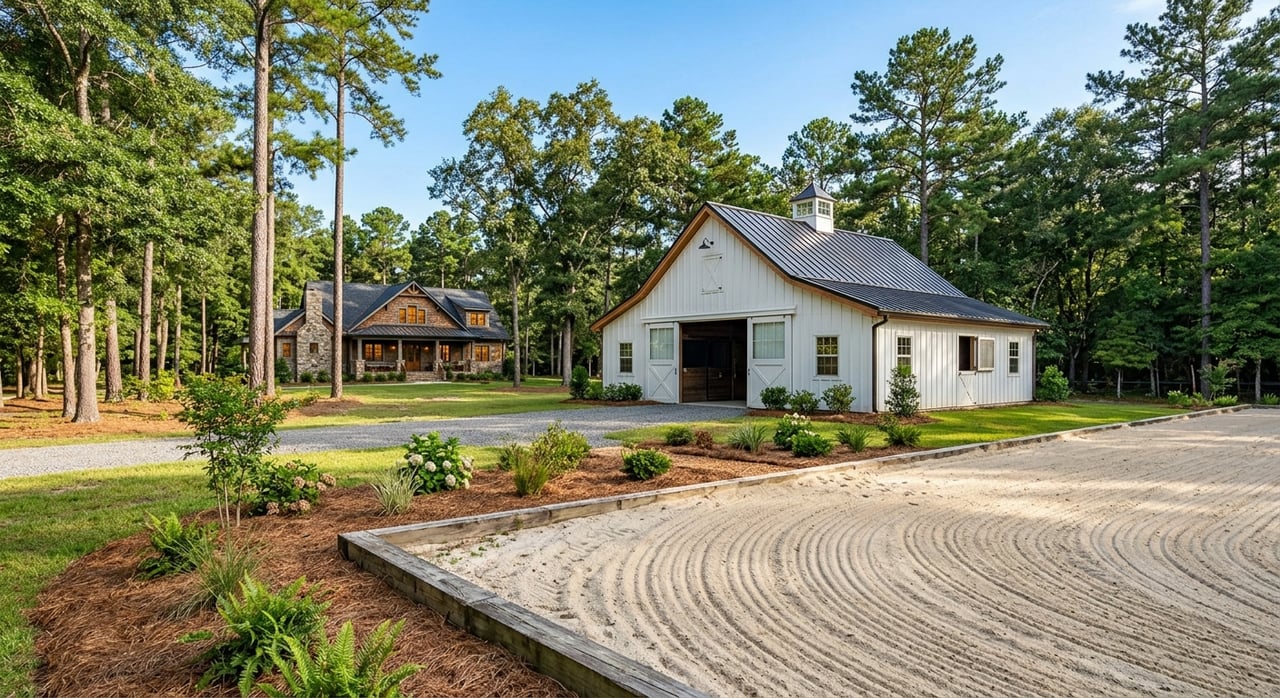
Choosing an Agent for Equestrian and Acreage Near Southern Pines
April 16, 2026
April 16, 2026
If you are buying or selling horse property near Southern Pines, the agent you choose can shape everything from due diligence to final value. Acreage and equestrian properties come with a different set of questions than a typical neighborhood home, and small details can have a big impact on how you use the land. With the right guidance, you can avoid surprises, ask better questions, and move forward with more confidence. Let’s dive in.
Horse property in Moore County is not just about finding a pretty barn and enough land. You also need to understand how local zoning, land use, drainage, soils, water, and access can affect the property today and in the future.
Moore County explicitly recognizes equestrian activity in its zoning. The county’s Rural Equestrian district was created to acknowledge Horse Country, has a minimum lot size of 1 acre, and allows accessory horse stables in the front, side, or rear yard if setback rules are met.
That matters because not every agent is prepared to explain the practical difference between a standard residential transaction and one involving equine uses, barns, boarding, or training. The county also identifies equine industry uses such as stabling, boarding, training, riding lessons, clinics, and schooling shows in its land-use framework.
When you look at acreage near Southern Pines, zoning should be part of the first conversation, not the last. A property may appear to fit your goals, but the approval path can vary depending on the district, the intended use, and whether farm-related rules apply.
According to Moore County’s Unified Development Ordinance and related equestrian zoning materials, agritourism is treated as a farm use and can include horse farms, boarding, riding lessons, training, buying and selling, showing, and racing. The county also notes that bona fide farms may be exempt from zoning in some cases, though subdivision, flood, and watershed standards can still apply.
An experienced agent should be able to explain what that means in plain language. If you are buying, you want clarity on whether the property supports your intended use. If you are selling, you want your property positioned accurately so buyers understand its value and potential without confusion.
With horse property, the land is not just a backdrop. It is part of the asset. Pasture usability, drainage, layout, and soil conditions all affect how the property functions.
The Sandhills region sits in the southwestern part of North Carolina’s upper Coastal Plain and is known for predominantly sandy soils formed from ancient marine sands, according to North Carolina Wildlife Resources information on regional habitats. Moore County Extension also notes that local Sandhills soils are often very acidic, typically around pH 4.5 to 6.
That is why soil testing should happen early instead of being treated like a minor box to check. If you are evaluating pasture performance, footing conditions, or future improvements, those soil realities can affect both cost and practicality.
For site-specific information, the USDA NRCS says the Web Soil Survey is the authoritative source for soil survey information and can generate custom soil reports for a county or a specific property. A knowledgeable agent should know when to point you toward that step and how it fits into the larger due-diligence process.
Beautiful acreage can still have functional problems. One of the biggest issues on horse properties is poor drainage and the mud that follows.
NC State Extension guidance on wet pasture damage recommends rotational grazing, keeping animals off very wet areas, and using sacrifice areas or high-traffic pads to protect pasture. Those are not small details. They can affect daily management, maintenance costs, and the long-term condition of the land.
Moore County also has standards tied to animal operations, including adequate drainage, at least 150 square feet per horse, and outdoor shelters with at least three sides and a waterproof roof, as cited in the same Extension-based guidance referenced in the research. A strong equestrian agent should know how to spot red flags like low areas, worn gates, overused paddocks, poor barn placement, or layouts that make mud control harder.
If a property relies on private systems, water and wastewater questions should be addressed before you get too far into the transaction. This is especially true with acreage, where future additions, barn plans, or use changes can affect the approval path.
Moore County’s septic system permit application instructions say owners must mark property boundaries, stake proposed structures, and make the site accessible before an environmental health visit. The county also states that a valid improvement permit and construction authorization must be in place before building or electrical permits are issued, and approvals can be revoked if the intended use changes.
The North Carolina Department of Environmental Quality also notes that private wells are handled through county health departments. In practical terms, that means your local county process matters. A capable local agent should help you think through septic, well verification, and intended use at the start, not after inspections uncover a problem.
A general real estate skill set is helpful, but niche acreage and equestrian transactions ask for more. You need someone who understands both the paperwork and the land itself.
According to NAR’s 2024 and 2025 buyer and seller trend reporting, buyers most value agents who point out unnoticed features or flaws, explain the process, provide service-provider referrals, and improve their knowledge of the search area. Sellers prioritize marketing, competitive pricing, and a timely sale.
For Southern Pines and greater Moore County acreage, that means the right agent should be able to:
That mix of local knowledge and practical judgment is what helps reduce friction in a niche transaction.
If you are buying equestrian or acreage property near Southern Pines, your interview questions should go deeper than basic home search topics. You want to know whether the agent can help you evaluate a property as a working site, not just a listing.
Here are smart questions to ask:
The goal is not to hear perfect buzzwords. The goal is to hear a clear, local, practical process.
If you are selling acreage or equestrian property, the right agent should know how to market what makes your property different. That includes both the lifestyle appeal and the functional details buyers care about.
NAR reports that 52% of buyers found the home they purchased online, and 81% rated listing photos as the most useful online feature. For a niche property, that means your presentation needs to go beyond a few standard photos.
Ask potential agents questions like these:
A strong listing strategy should capture both emotion and function. Buyers need to imagine the property, but they also need enough information to understand its utility.
Acreage and equestrian properties often have fewer comparable sales than homes in a subdivision. That is one reason seller strategy matters so much.
Usable pasture, barn condition, fencing, drainage, layout, and possible trail connections can all shape how buyers perceive value. At the same time, buyers may weigh those features differently depending on whether they want private use, a small farm setup, or a more active equestrian operation.
The right agent should be able to explain how those factors may affect pricing and market time. That takes more than pulling a few recent sales. It takes local context, property-specific judgment, and clear communication.
With a niche property, you benefit from an agent who can keep the moving parts organized while still giving personal attention. That includes the technical side, the presentation side, and the relationship side.
For buyers, that may mean better guidance on site conditions, vendor coordination, and next steps. For sellers, it may mean stronger staging, more intentional marketing, and a clearer story around the property’s features and uses.
When you are dealing with Southern Pines horse country and Moore County acreage, local roots matter. So does the ability to translate complex land questions into practical advice you can actually use.
If you are thinking about buying or selling equestrian or acreage property near Southern Pines, working with a local specialist can make the process far more efficient and far less stressful. If you want experienced, boutique guidance rooted in Moore County knowledge, connect with Brittany Paschal to start the conversation.
Stay up to date on the latest real estate trends.
I strive for lasting relationships with my previous customers even after the sale! I want to be your go-to agent for you and your friends and family for years to come.
BRITTANY PASCHAL
ADDRESS 250 N BENNETT ST SOUTHERN PINES NC 28387