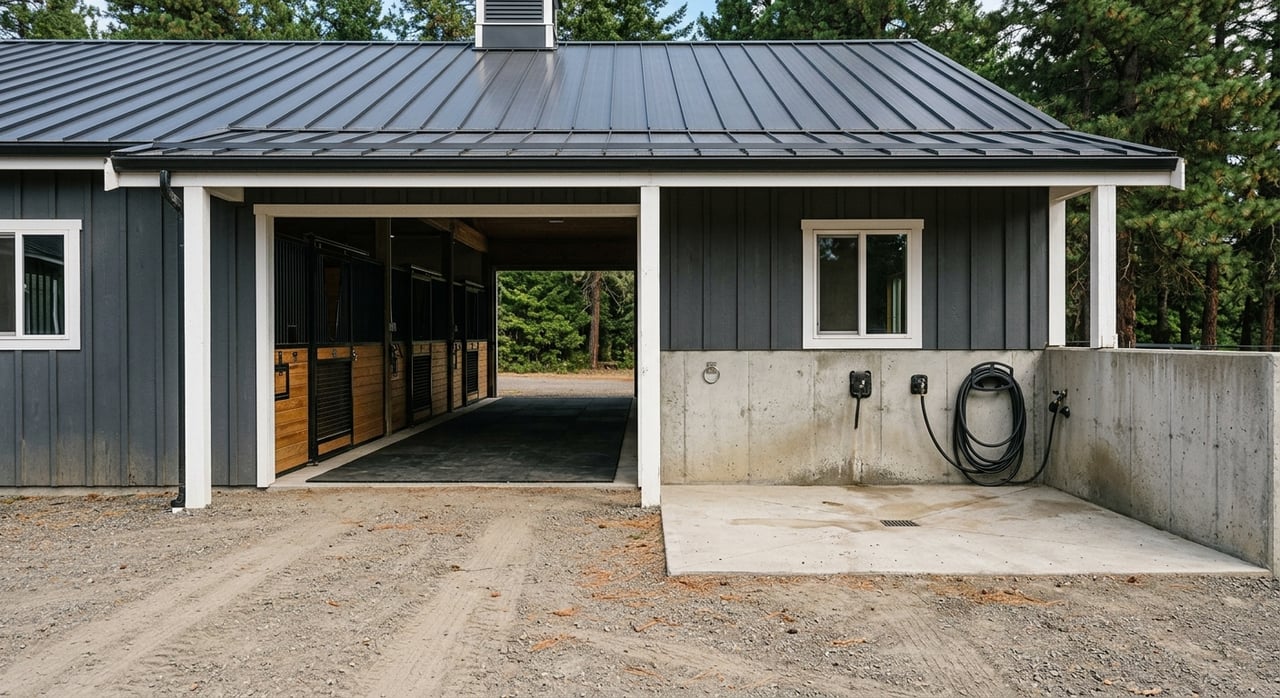
Preparing a Hoke County Horse Property for the Market
April 2, 2026
April 2, 2026
Selling a horse property in Hoke County is not the same as listing a typical home on acreage. Buyers look past square footage and finishes fast. They want to know if the property is usable, documented, and ready for day-to-day equestrian life. If you plan ahead, you can answer those questions before they slow down your sale. Let’s dive in.
Before you touch up fencing or schedule photos, confirm what the property legally supports today. Hoke County notes that all zoning designations should be verified with Planning Staff before development, so it is smart to verify the current district before marketing a property for horse use through the county's GIS and zoning resources.
That step matters because buyers often ask a simple first question: Is horse use allowed here? Your listing will feel much stronger when you can point to confirmed zoning instead of relying on old assumptions or informal local knowledge.
Hoke County's 2022 agricultural census profile also shows that horse properties are not a fringe niche in this area. The county reported 565 horses and ponies, and county zoning language notes that Rural Preservation and Residential Agricultural districts are intended to accommodate low-intensity agricultural operations and agricultural uses, according to the 2022 Ag Census county profile.
Horse-property buyers tend to notice improvements that may have required approval. Barn additions, lean-tos, tack rooms, wash racks, arena-related features, and converted living space all draw attention during due diligence.
Hoke County states that no land may be used or occupied and no building may be altered, erected, moved, used, or have its use changed until a zoning permit is issued. The county's zoning permit process also requires a scaled plan showing lot dimensions, building locations, uses, parking, and driveways.
Hoke County Inspections also enforces state building codes and warns that starting work without required permits can lead to enforcement action and double permit fees, as explained by the county Inspections Department. Before you list, gather records for any structures or conversions so buyers do not have to piece together the history on their own.
If your property uses a private well or septic system, this paperwork matters just as much as a fresh coat of paint. Hoke County Environmental Health handles those permits and evaluations, and its site evaluation process requires items like a plot plan, setbacks, zoning permit, and property layout.
For a seller, that means your records can become a real advantage. If you already have key documents in hand, you can reduce back-and-forth during due diligence and make the property feel better maintained from the start.
On a horse property, pasture condition tells a story right away. Buyers are looking for usable ground, decent coverage, and signs that the land has been managed rather than simply occupied.
NC State Extension notes a traditional rule of thumb of about two acres of pasture per mature 1,100-pound horse for year-round grazing and hay production, and its rotational grazing guidance stresses maintaining enough ground cover to support regrowth and reduce weed pressure, according to NC State Extension horse-forage guidance.
That does not mean every buyer expects perfect pasture. It does mean overgrazed areas, bare patches, and muddy entrances can raise questions about how the property performs in real life. Before listing, mow as needed, define sacrifice areas, and make sure turnout spaces read as intentional and functional.
In Hoke County, drainage is part of presentation. Using nearby Fayetteville Regional Airport as a climate proxy, 1991 to 2020 climate normals show summer highs around 86 to 92 degrees from June through August, winter highs mostly in the mid-50s to low-60s, and precipitation throughout the year.
That pattern makes mud control, dry footing, and shade more than cosmetic upgrades. Buyers touring in wet or hot conditions will quickly notice whether gates, loafing areas, and paths stay usable.
Small signs of neglect can stand out on acreage. NC State Extension notes that fire ants in pastures can injure animals and people and damage equipment, and it also notes that horse flies are often associated with low-lying, poorly drained areas.
Before photos and showings, walk fence lines, clean up weedy corners, and address visible mounds or wet spots where possible. Buyers may not know every technical detail, but they usually know when a property looks hard to maintain.
Fence style gets attention, but fence condition usually matters more. NC Extension explains that North Carolina law places responsibility on livestock owners to keep animals fenced, does not require one specific fence type, and leaves the owner responsible for maintaining fencing in good repair, as outlined in this NC Extension livestock liability resource.
For listing prep, focus on what a buyer can see right away:
If you have invoices or records of fence work, keep them in your seller packet. Documentation helps support the idea that the property has been cared for, not patched together.
If your property borders a creek or drainage swale, managed fencing near that area can be a plus. NC State Extension says livestock exclusion fencing can reduce nutrient, pathogen, and sediment movement into streams and help stabilize streambanks.
That kind of feature can make the property feel both practical and well stewarded. It shows buyers that land management has been part of ownership, not an afterthought.
Your barn does not need luxury finishes to impress buyers. It does need to feel safe, clean, and easy to understand.
Start with the basics. Clear aisles, remove broken equipment, sweep tack areas, and make sure storage spaces feel orderly. If you have multiple outbuildings, label their purpose in your own notes so your agent can explain the layout clearly during marketing and showings.
Permit history matters here too. Hoke County Inspections reviews plans for life-safety compliance and enforces building code requirements, so records for stall buildings, lean-tos, tack rooms, wash racks, and any office or apartment conversion should be gathered before the property goes live, based on county Inspections guidance.
Horse-property buyers often think like operators. They are not just asking whether the property looks good. They are asking whether it works.
Because Hoke County's zoning permit application specifically references parking and driveways on the site plan, trailer access, turnaround space, and drive condition are worth addressing before you list. A graded drive, clear parking area, and visible address marker can make a strong first impression with serious buyers.
Service areas count. If the farm includes a manure or compost area, keep it tidy, accessible, and easy to explain.
NC State Extension notes that composting can be a viable manure-management option, and its guidance also notes that herbicide history can matter before manure or compost is reused on sensitive crops. For sellers, the takeaway is simple: neat storage, clear access, and basic records are better than an improvised pile hidden behind a barn.
On an equestrian listing, the house and the horse setup should feel connected. Buyers want the whole property to read as cared for from the driveway to the barn aisle.
That means cleaning porches, trimming landscaping, clearing clutter near the house-to-barn path, and handling visible deferred maintenance. Even if your buyer is horse-first, the residence still shapes how the entire property is perceived.
A clean, functional house also supports the value story. It tells buyers that the same level of care likely carried into the less visible parts of the property too.
One of the best ways to prepare a Hoke County horse property for market is to make due diligence easier before it starts. A well-organized seller packet can answer the exact questions buyers are already likely to ask.
Your packet may include:
This kind of preparation lines up with Hoke County's zoning, inspections, and environmental health processes. It can also reduce friction once a serious buyer starts looking more closely.
Horse-property buyers in Hoke County are often evaluating more than beauty. They are judging function, safety, access, and paperwork at the same time.
When you prepare your property with those priorities in mind, your listing becomes easier to trust. You also give yourself a better chance to attract buyers who are ready to move forward instead of buyers who get stuck on unanswered questions.
If you are thinking about selling and want practical guidance on how to position your acreage, equestrian setup, and home for the market, Brittany Paschal brings local horse-country perspective, presentation expertise, and hands-on real estate guidance to help you prepare with confidence.
Stay up to date on the latest real estate trends.
I strive for lasting relationships with my previous customers even after the sale! I want to be your go-to agent for you and your friends and family for years to come.
BRITTANY PASCHAL
ADDRESS 250 N BENNETT ST SOUTHERN PINES NC 28387